Brake pads, rotors, calipers, master cylinders, ABS sensors and hydraulic lines to General Motors original specification. Fitment verified by VIN.
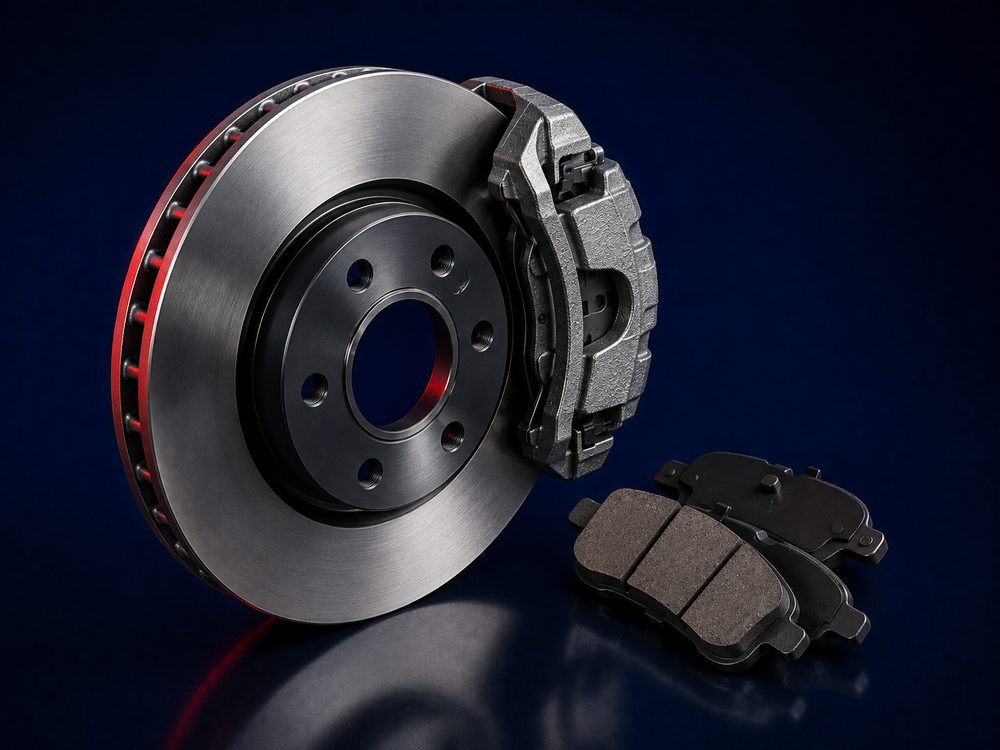
Braking is the one system where original specification is a safety argument rather than a preference. GM validates pad friction coefficient against the vehicle's mass, the ABS calibration and the rotor's metallurgy as a single package. A pad with a different friction curve changes stopping distance, alters how quickly the ABS module intervenes, and on trucks with trailer brake integration changes the balance between vehicle and trailer. We supply friction and hydraulic components to the original specification for the platform.
Pedal force becomes hydraulic pressure in the master cylinder, the ABS module meters it per wheel, and the calipers convert it back into clamping force at the rotor. Firm pedal, straight stop.
Interactive schematic — behaviour illustrated for orientation, not a model-specific engineering drawing.
Pedal force becomes hydraulic pressure, the ABS module modulates it per wheel, and the caliper converts it back into clamping force at the rotor.
Brake judder is far more often caused by uneven pad material transfer and hub runout than by a genuinely warped rotor. Check hub face runout before condemning the rotor, or the new one will develop the same symptom.
We supply Brake System components across every General Motors division:
Not always, but they must be measured. If thickness is at or near the discard limit stamped on the rotor, or lateral runout is out of specification, replacement is the only correct answer.
This is usually a wheel speed sensor or a damaged reluctor ring sending an implausible signal at low speed, not a hydraulic fault. Scan for the specific wheel before replacing hydraulic parts.
Send the VIN and a description. We will identify the correct OE part and quote it back to you.
Request a Quote